

PizzaPilot is officially on WordPress.org! The free plugin has been approved and is live at wordpress.org/plugins/pizzapilot, and its big brother, PizzaPilot Pro, is available now from pizzapilotpro.com.
I’ve released plenty of code over the years, but this one feels different. It isn’t a side project I dreamt up on a quiet afternoon. It’s the ordering system that runs our own little pizza business, built by me and tested every Thursday, Friday and Saturday night by my wife Rachael Willoughby, our customers and anyone unlucky enough to be standing near the oven when something went tits up.
How a lockdown pizza habit became a plugin
So, rewind to 2020. The first lockdown hit, and Rachael and I started selling pizza from our home kitchen. That became CasaGees, and we took our first orders in April 2020. I’d made pizza all my life (and spent my early career as a chef before WordPress came along), so the cooking was the easy bit…
It wasn’t always CasaGees, mind. We originally went to trademark the name Papa Gees, and Papa John’s had other ideas. So we renamed, trademarked CasaGees instead, and got on with making pizza.
…the ordering was not. Anyone who has run a takeaway knows the problem. Everyone wants 7pm, nobody wants 5.30pm, and the oven can only cook so many pizzas in half an hour. Then there’s the customer whose address is “the farm past the second cattle grid”, and the delivery that turns out to be well outside the area after you’ve already taken the money.
At the same time I was watching WordPress developers all over the community scramble to turn brochure sites into ordering systems for clients who’d lost their front door overnight. Well, I was doing exactly the same thing for us. So I built it properly, on our own WooCommerce site, one real problem at a time.
That’s the bit I’m proudest of. Every feature in PizzaPilot exists because Rachael or I hit the problem on a busy night. Real world problems, real world solutions. We’ve now taken over 11,000 orders through it, we’ve gone from doing our own deliveries to employing local drivers, and a typical Friday sees around 90 pizzas go out of a kitchen that is, let’s be honest, still a home kitchen.
Getting it onto WordPress.org wasn’t entirely plain sailing either. The plugin review team questioned the name as a possible trademark clash, which was a bit of a moment. We’d already lost one name to a pizza giant, and pizzapilotpro.com is the root of the whole brand. A few polite emails later, PizzaPilot it stayed. Sweet huh!
What you get for free
The free plugin turns a WooCommerce shop into a timed ordering system for local delivery and collection. Customers pick a 30-minute slot at checkout, between whatever opening and closing times you set, so orders spread across the evening instead of all landing at once.
It checks the distance from your shop to the customer’s postcode and refuses delivery beyond your radius, before they pay. That uses a free UK postcode service, so there’s no API key to faff about with. Anyone outside the area can still choose collection.
There’s also a Delivery Postcode Checker block you can drop on any page, which answers “do you deliver to me?” before someone fills a basket. And the kitchen gets a simple Kitchen Orders page with today’s orders grouped by slot and a tick to mark each one done.
It works with both the classic and block checkout, and it’s compatible with WooCommerce’s newer order storage (HPOS, the faster custom tables WooCommerce now uses instead of cramming orders into the posts table).
What Pro adds (and why we needed it)
The free plugin is genuinely useful on its own, but Pro is what actually runs a CasaGees Friday night.
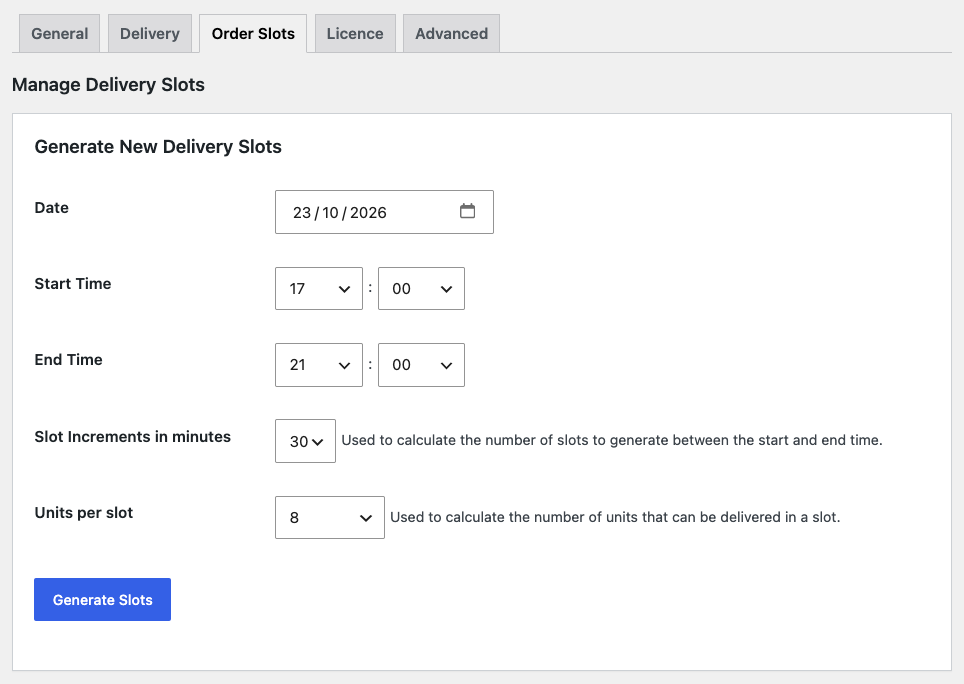
Ordering ahead. Customers can order for today and the next six days, picking a day and then a time. A Friday order placed on a Tuesday means we see the demand coming instead of finding out at 6pm. You build your slots in a slot manager, and it won’t let you delete a slot that already has an order in it (ask me how I know that matters).

Capacity that matches the kitchen. Every slot has a set number of places, and you decide what a place means: one per order, or one per item. We run it per pizza, at 12 pizzas a half hour. A slot with two places left simply can’t be booked by an order for five, and full slots vanish from checkout. No more promising more than the oven can deliver.
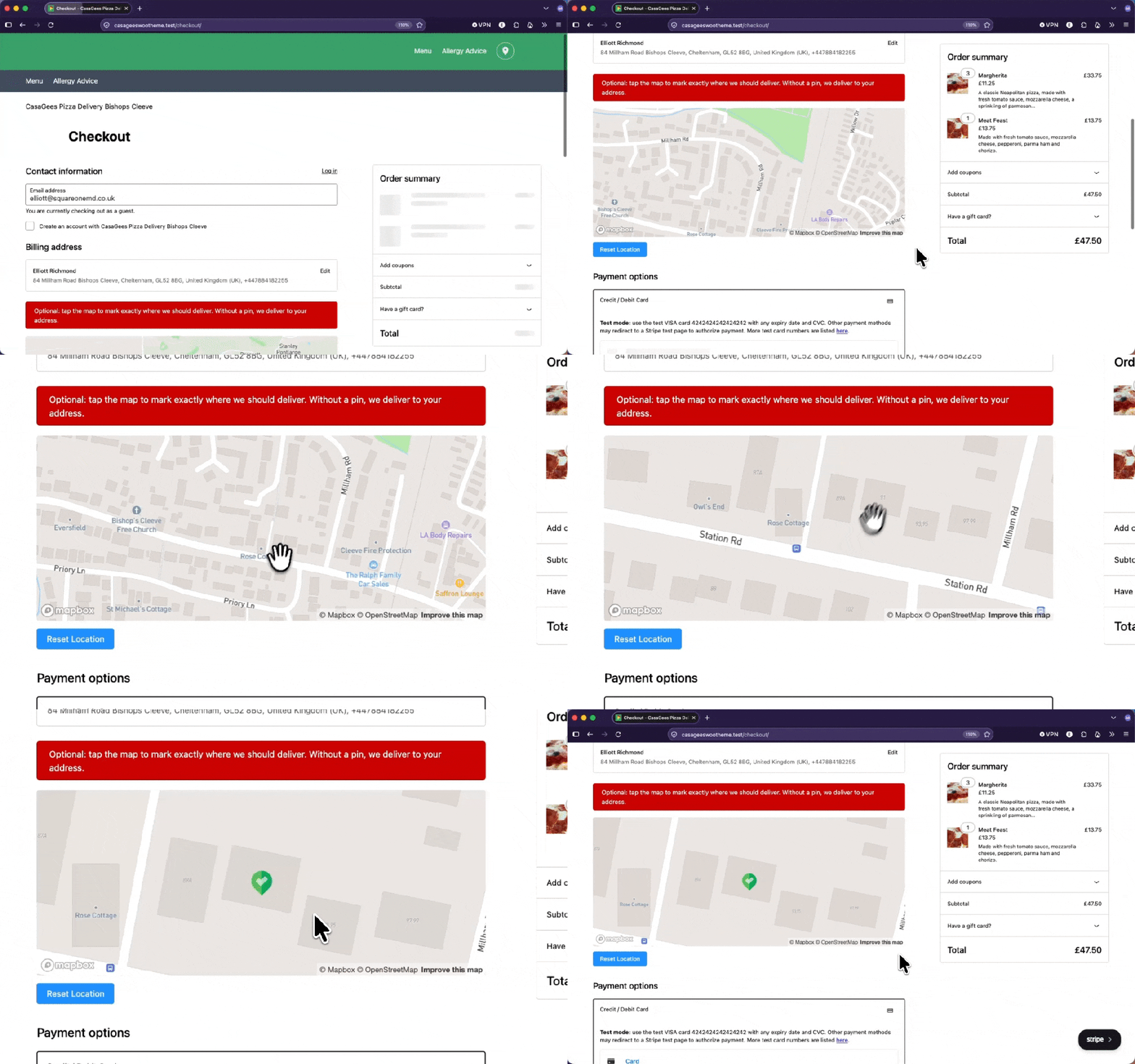
Exact delivery location. Customers can drop a pin on a map at checkout, and each pin gets a What3Words address (a unique three-word name for a 3 metre square). If you’ve ever tried to find a farmhouse from a rural postcode that covers half a valley, you’ll know why this one made it in.
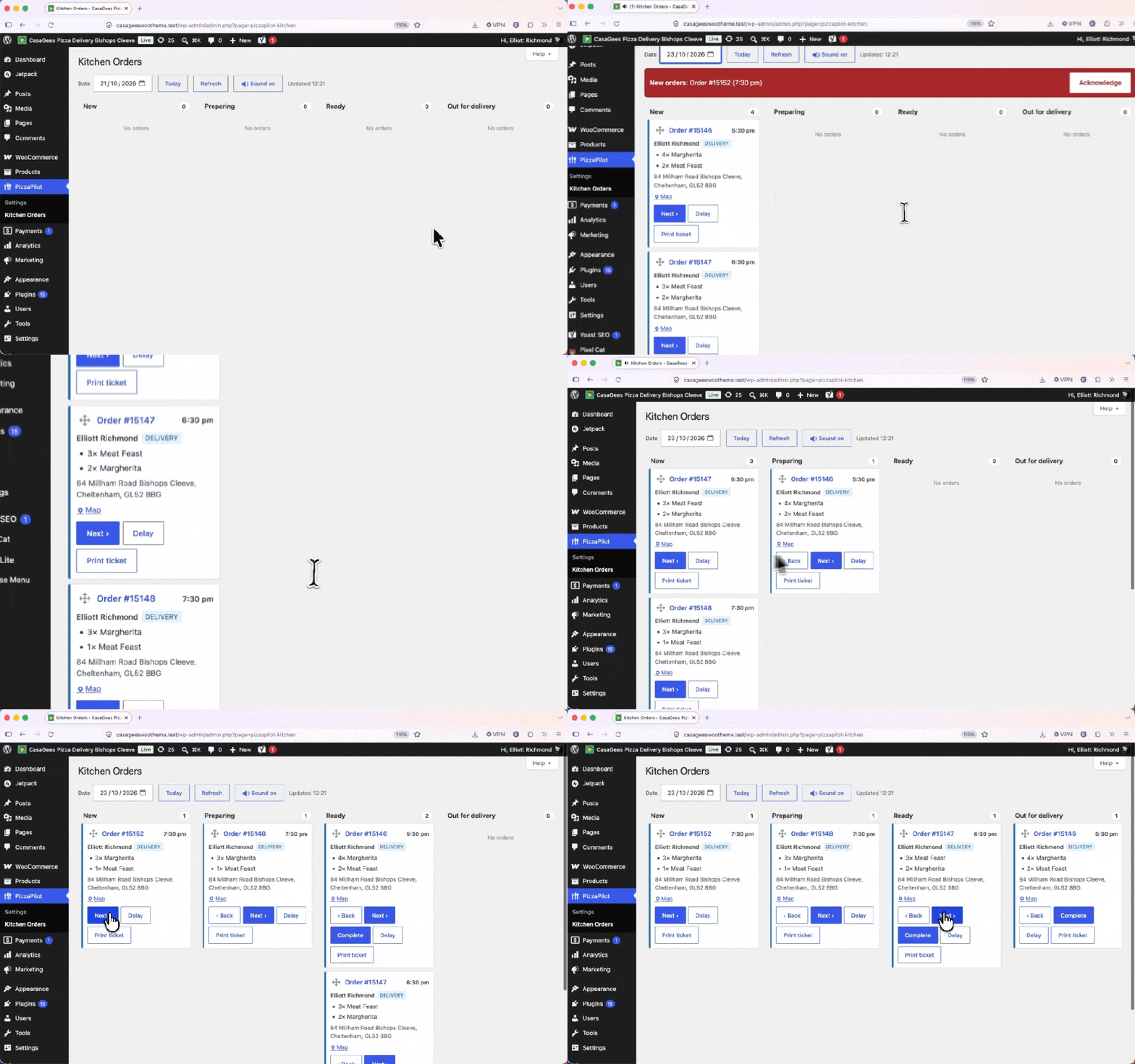
A live kitchen board. Orders move across New, Preparing, Ready and Out for delivery, by drag and drop or a tap. New orders chime until someone acknowledges them, every card counts down to its slot time, and several tablets stay in step. Goodbye pile of printed emails.
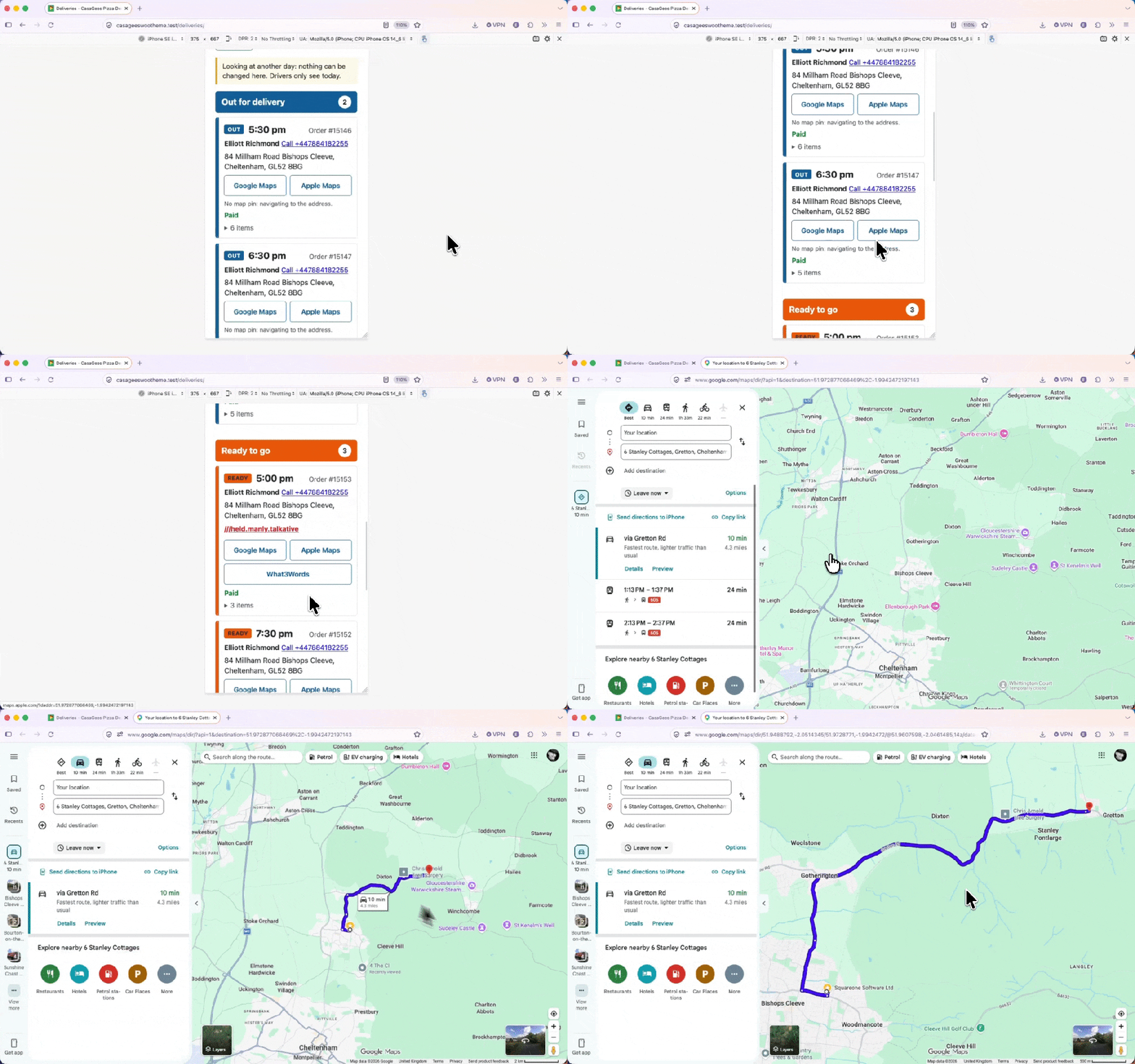
A Deliveries page for drivers. Drivers log in to a phone-friendly page (they never see the WordPress dashboard) with the address, a tap-to-call number, Google Maps, Apple Maps and What3Words buttons, and exactly how much cash to collect. Tapping Delivered records who delivered it and when. No more drivers ringing the shop for addresses, which on a busy night is worth the price on its own.
Pro also works outside the UK with a Google Maps key, and every outside service is optional, so if a key is missing it carries on trading rather than falling over. If a licence lapses, it keeps working for 14 days with a reminder, because nobody should lose their Friday night over a missed renewal.
As a launch offer, the first 100 customers get their first year of PizzaPilot Pro for £89, after which it goes up to £129 a year. It needs the free plugin installed alongside it.
Not just for pizza
Now, the name gives it away, but there’s nothing in PizzaPilot that only works for pizza. If you make or prepare things to order and hand them over at a set time, you’ve got the same headaches we had. Think takeaways of any kind, bakeries taking pre-orders, meal prep, butchers and farm shops doing weekend rounds, Sunday roast boxes, florists, and village shops offering click and collect.
The common thread is a small team, a limit on how much you can make or deliver every half hour, and a local delivery area. And because it all runs on your own WooCommerce site, the customers and the data are yours, with no delivery app taking a cut of every order.
Thank you
This has been a proper joint effort. Rachael is my wife and (let’s be clear about the pecking order) also my boss. We’ve worked together for 20 years building websites and online software for private clients, and she markets everything we do at Square One Software.
So when CasaGees came along she was the obvious person to market it, and that work has won multiple marketing awards, which is more than my code has ever managed. Marketing PizzaPilot is her next job, so you’ll be seeing a lot more of it.
She’d be the first to tell you she isn’t as confident with software as I am, but that’s exactly what made her so valuable here. She has been the physical tester of the whole thing (the software and the pizza), and she’s the one who gathers feedback from our online customers and brings it back to me. If something didn’t make sense to her, it wasn’t going to make sense to a busy takeaway owner either. PizzaPilot wouldn’t be what it is without her, and CasaGees wouldn’t exist at all.
Thanks too to our customers, who have been unknowing beta testers for over five years, to our drivers, and to the WordPress.org plugin review team for keeping the directory honest.
If you run a food business, or build sites for people who do, go and grab PizzaPilot from WordPress.org and give it a spin. When you outgrow it, PizzaPilot Pro is waiting. And if you find a bug, be gentle. It’s been a long few years!
Leave a Reply